Crystal vs Glass Fancy Lights: What's the Trending Difference?
Get a deeper understanding of modern lighting trends, crystal vs glass fancy lights, to make an informed decision and let your interiors stand out.
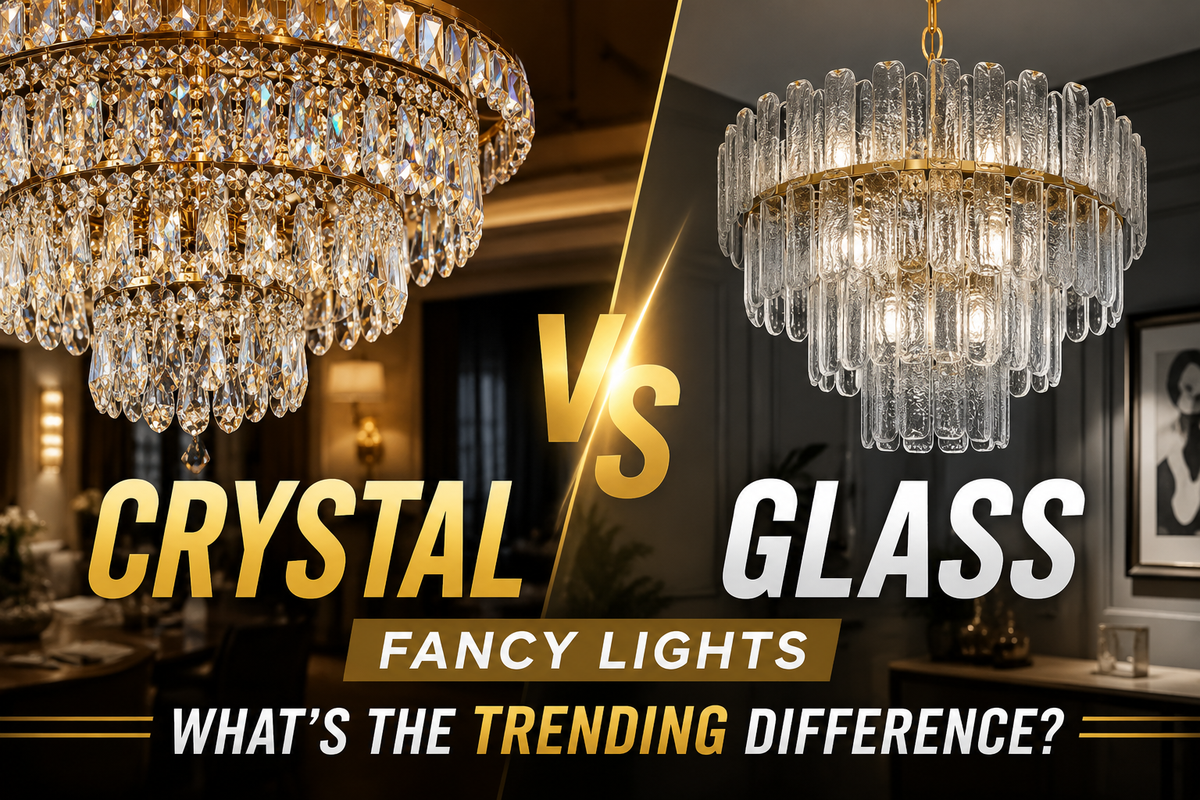
Crystal vs Glass Fancy Lights: Which One Is Right for Your Space?
Modern interiors require sophistication that creates a calm, welcoming environment. When designing a modern home or elevating an interior space, few fixtures carry the visual impact of decorative lighting. This is where deciding between crystal vs glass fancy lights—from dining room chandeliers to artistic wall sconces and sleek pendants—becomes important.
You must know that these lights do far more than illuminate a room.
These modern designer lighting styles anchor the aesthetic, dictate the atmosphere, and set the overall tone. Therefore, to ease your choice, here is a look into the trending differences between these two luxury lighting fixtures to help you choose the right material for your space.
Material Composition and Science of Crystal and Glass Fixtures
To understand how crystal vs glass fancy lights perform under light, you must be aware of what they are made of.
Glass Lighting
Glass fancy lights are often soda-lime glass or borosilicate glass. This is primarily composed of silica (sand), soda ash, and limestone.
It is durable, non-porous, and relatively lightweight, making it highly versatile for diverse manufacturing techniques like hand-blowing, slumping, and frosting.
Crystal Lighting
Crystal chandelier lights or modern pendants are technically a refined subcategory of glass infused with minerals such as lead oxide, zinc, potassium, or titanium.
Adding these metal oxides lowers the melting point, making the material softer and far more malleable. This allows artisans and machines to cut razor-sharp facets and intricate geometric patterns into crystal without shattering it.
Refraction and Sparkle in Crystal and Glass Fancy Lights
The most highlighted difference between crystal vs glass fancy lights is the way they handle light.
The Crystal Sparkle Factor
Trending fancy lights with crystal accents boast a much higher refractive index than standard glass. Because crystal bends light at steeper angles, it causes dispersion, splitting white light into crisp, prismatic spectrums.
Moreover, when an LED or incandescent bulb shines through cut crystal facets, it casts dancing flecks of light and subtle rainbow flashes across nearby walls and ceilings.
The Glass Ambiance
In understanding and decision-making for crystal vs glass fancy lights, know that standard glass doesn't refract light into intense sparks.
However, such fixtures transmit light smoothly. Clear glass creates crisp, architectural illumination, while frosted, opalescent, fluted, or smoked glass diffuses light evenly.
Crystal vs Glass Fancy Lights: Current Interior Design Trends
Interior design trends evolve constantly, and selecting between glass and crystal chandelier lights is no exception.
Therefore, this simple analysis can help you choose the best one for your interior.
Glass Trends: Minimalist, Sculptural, and Organic
In the game of modern crystal vs glass fancy lights, glass has taken center stage in modern minimalism, Japandi, and Mid-Century Modern interiors.
Blown & Textured Glass
Artisanal hand-blown glass globes, ribbed/fluted textures, and water-ripple effects are widely popular.
Smoked & Tinted Glass
Amber, smoked gray, and frosted olive glass shades offer soft, ambient mood lighting with an architectural feel.
Sculptural Installations
Multi-pendant glass configurations look like glowing bubbles or floating clouds, prioritizing shape over sheer brilliance.
Crystal Trends: Architectural and Modern Luxury
Crystal is no longer confined to traditional grand ballroom chandeliers. They now also blend with glass fixtures along with the following trends:
Linear Crystal Bars
Crystal trending fancy lights are sleek, horizontal LED chandeliers encased in precision-cut K9 crystal prisms.
They look good over kitchen islands and long dining tables.
Architectural Geometry
Designers are using faceted crystal in sleek matte black or brushed brass frames, blending classic luxury with clean, contemporary lines.
Integrated LED Crystal
Modern LED chips allow crystal fixtures to stay ultra-slim while projecting high-brilliance accent lighting.
How to Choose for Your Space
To determine whether crystal or glass fits your project, consider the primary goal of the room.
The Entryway / Foyer
In terms of crystal vs glass fancy lights, it is recommended to go with crystal if you want to create an immediate, unforgettable statement of elegance and height as guests step inside.
The Dining Room
Choose crystal for formal, glamorous dining setups where sparkling light enhances dinner settings.
Opt for glass if you prefer intimate, warm, relaxed lighting that keeps the focus on conversation.
The Bedroom
It is better to opt for glass in bedrooms. You can go for frosted, globe, or smoked glass fixtures paired with dimmers to provide gentle, calming illumination ideal for relaxing environments.
Kitchen Islands
Choose glass pendants for a clean, minimalist style if you want to add a punch of modern luxury.
Final Thoughts
The decision between crystal vs glass fancy lights comes down to ambiance, aesthetics, and lifestyle.
If you crave visual drama, high brilliance, and timeless elegance that acts as fine room jewelry, crystal remains the ultimate luxury investment.
However, if your vision leans toward understated sophistication, low-maintenance living, and versatile sculptural shapes, modern glass fixtures offer warmth and continuous style.
Read more
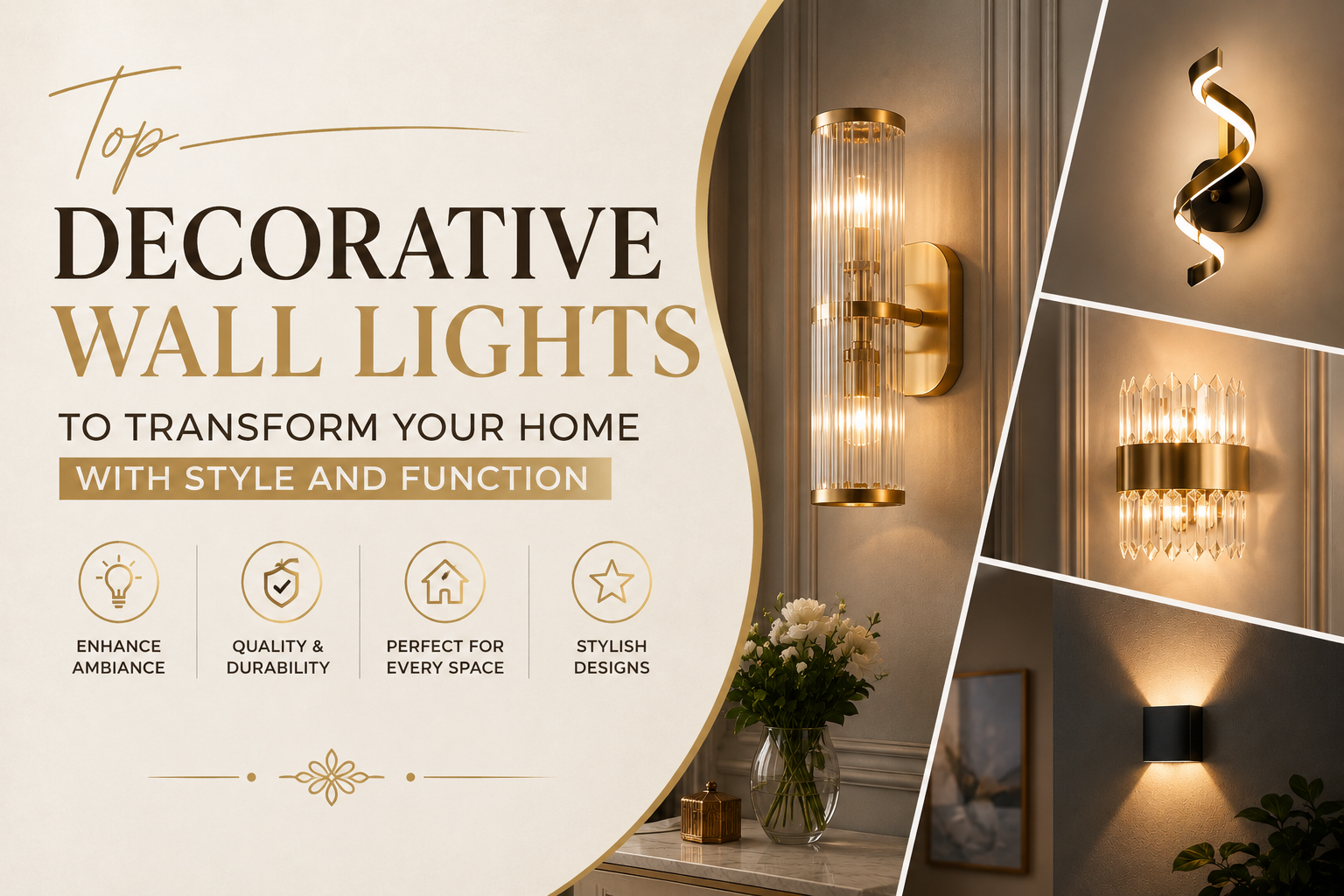
Top Decorative Wall Lights to Transform Your Home with Style and Function
Know about the modern and top-rated decorative wall lights that add elegance to your home with both style and functionality.
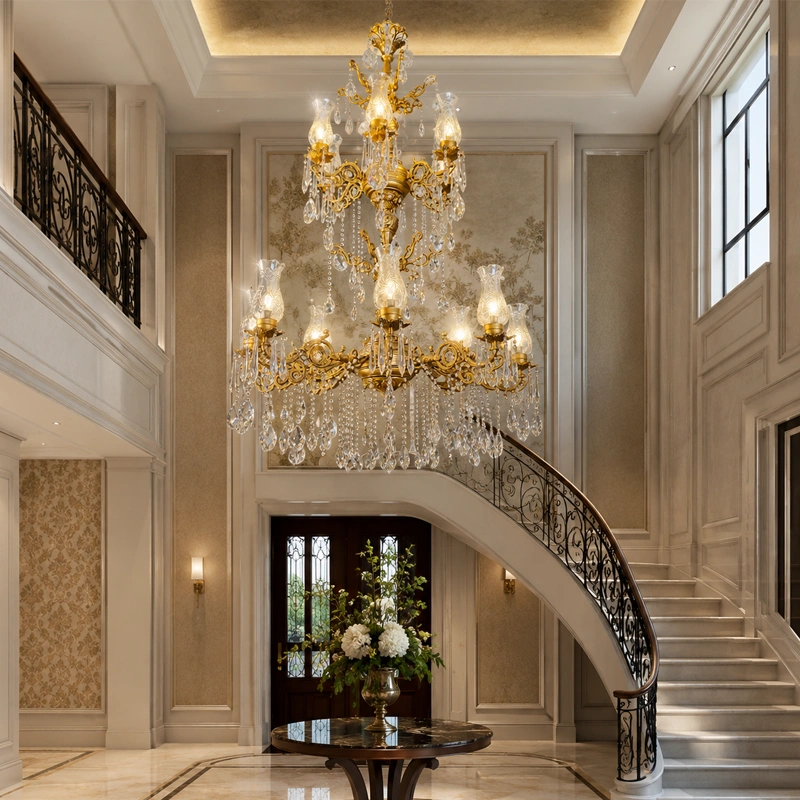
Die-Cast Chandeliers: The Modern Interior Design Trend
Details on the modern die-cast chandeliers that are becoming a trend in the industry, with tips to help you make a good choice while selecting one.
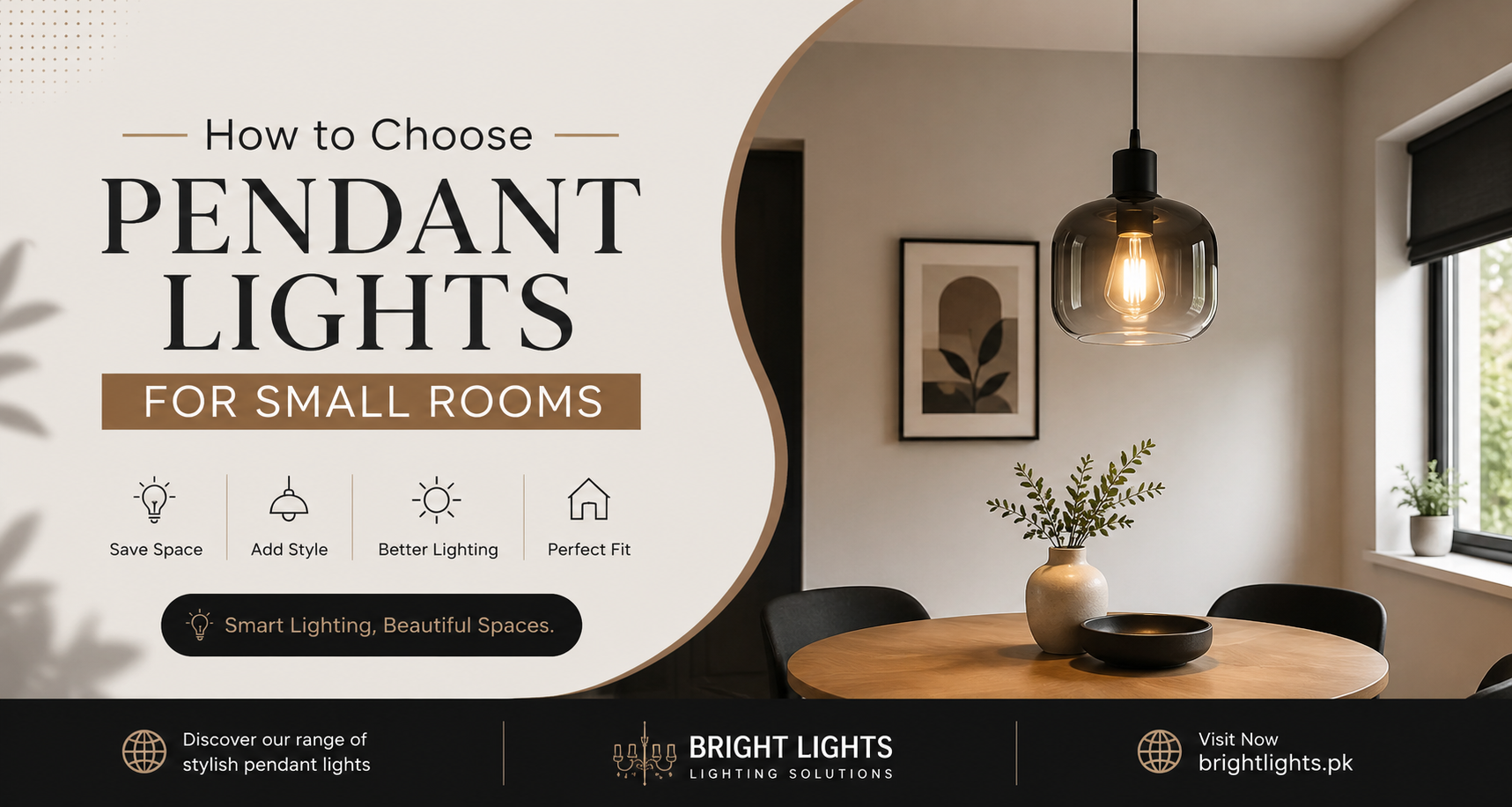
How to Choose Pendant Lights for Small Rooms
A simple guide to help you choose pendant lights for small rooms that also assist you free up space and provide a wider look of your compact area.