
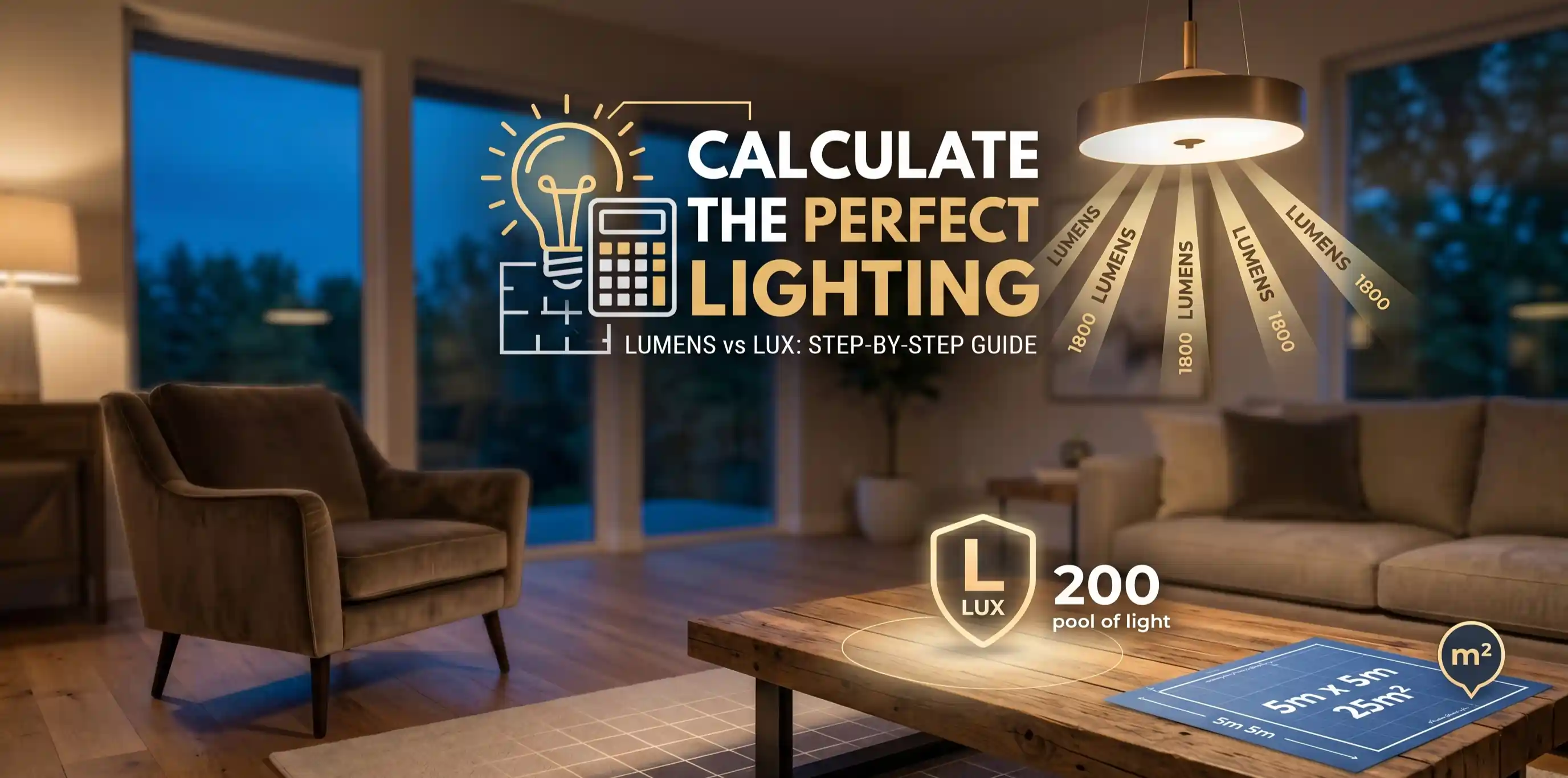
How to Calculate the Perfect Lighting for Any Room
Learn the difference between Lumens and Lux, and discover the simple formula to calculate the exact amount of light required for your space.
The market is filled with a vast array of indoor, outdoor, bathroom, vanity, and multi-purpose lights. Whether you are renovating your home or upgrading an office setting, installing stylish fixtures can keep your space looking modern and ahead of the curve. Both indoor and outdoor areas benefit immensely from trendy lighting that enhances their visual appeal. For instance, a contemporary double-head wall light can make a striking statement in a bedroom, an alleyway, on a front elevation, or even in a parking lot.
However, selecting the right fixture goes beyond just aesthetics. If you want to understand how to calculate the exact amount of light a room needs, comprehend color temperatures, and make informed purchasing decisions, this guide will clear up all your doubts.
How Much Light Does A Room Need?
Proper room lighting is critical. Understanding the type and intensity of light a fixture produces is incredibly helpful when shopping for bulbs or lamps. Have you ever looked at a beautifully designed lamp and wondered if it would actually be bright enough for your living room?
The first thing to remember is that lighting preferences are subjective. One person might feel most comfortable in a brilliantly lit room, while another prefers a softer, dimmer atmosphere. To ensure you know exactly what a fixture will look like in your home, you need to understand the two most important characteristics of lighting: the amount of light (measured in lumens) and the color temperature.
How to Measure Light Intensity
Light intensity is measured using specific units, primarily Lumens and Lux. Understanding the difference between the two is the key to perfectly illuminating your home.
Lumen (lm)
The Lumen is the standard measure of luminous flux, which essentially means the perceived power or brightness of the light. It is the perfect metric for comparing the raw intensity of different bulbs. While the perceived brightness can vary based on factors like the beam angle and the distance from the light source, lumens give you a standard baseline. A ceiling fixture far from the floor might emit 2,000 lm, representing the total light output directly from the LED source.
Lux (lx)
While lumens tell you how much light a bulb produces, Lux tells you how much of that light actually reaches a surface. Lux is used to define the specific area being illuminated. This measurement relates the lumen output to square meters, making it much easier to determine if a room has adequate lighting. A 20-square-meter room requires fundamentally different lighting than a 15-square-meter room, even if you use the same bulb.
The Room Lighting Calculation Formula
To calculate the exact lighting requirements for your room, you need to know its approximate size in square meters and your target Lux level (which varies by room type).
Here is the fundamental formula for measuring Lux:
Lux = Lumens ÷ Square Meters
If you know your target Lux and the size of your room, you can flip the formula to find out exactly how many Lumens you need to buy:
Lumens = Lux × Square Meters
By plugging your room's square footage into this equation, you can narrow down your choices and select fixtures that provide the precise lumen output required.
Pro Tips for Accurate Calculations:
- Account for Furniture: Bulky furniture absorbs light and reduces the functional square footage of a room. Adjust your measurements accordingly.
- Consider Room Colors: Dark walls and decorative elements absorb ambient light, meaning you will need a higher lumen output. Conversely, white tones and mirrors reflect light, making the room feel brighter with fewer lumens.
Final Words
We hope this breakdown of light measurements empowers you to choose the absolute best lighting products for your home. Please share this information with your friends and family if you found it helpful!
If you are looking for top-tier fixtures, Bright Lights offers high-quality LED products at highly reasonable prices.
Read more

Top Decorative Wall Lights to Transform Your Home with Style and Function
Know about the modern and top-rated decorative wall lights that add elegance to your home with both style and functionality.
Brilliant Ceiling Light Ideas to Transform Your Home
A comprehensive guide on how to choose the perfect ceiling lights based on room purpose, size, and interior style.

Crystal vs Glass Fancy Lights: What's the Trending Difference?
Get a deeper understanding of modern lighting trends, crystal vs glass fancy lights, to make an informed decision and let your interiors stand out.